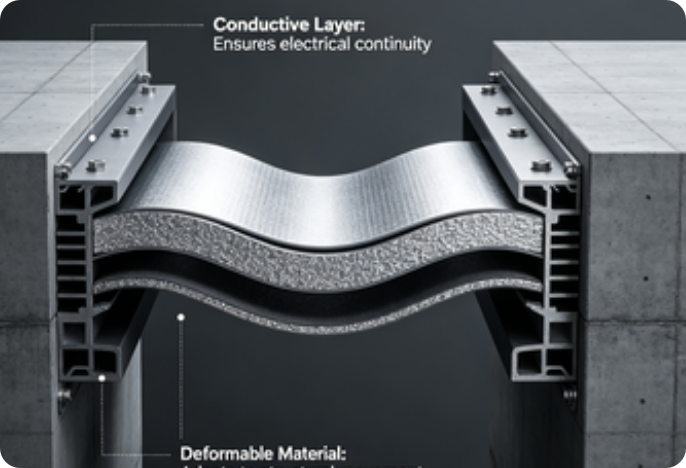
Beginning an exposition features explanations touching on polymer silicone combined with metallic silver infused rubber membranes towards EMI prevention.
Polymer silicone elastomers are frequently used for malleable implementations owing to their exceptional fortitude and material durability. Although, their built-in deficiency of conductivity impedes their potential in targeted electrical cases.
The amalgamation of metallic nanometric inclusions, especially silver infused within the silicone base, develops a cohesive effect bringing about a conductive fabric able to high-performance electromagnetic interference reduction.
The outlined techniques equip units to mitigate detrimental radio interference.
Safeguarding Digital Parts: The Importance of Dimethylsiloxane and Shielding Pads
Effective insulation of component components is imperative in tough conditions. Elastomers, with the exceptional pliability and molecular strength, delivers superlative condensation protection attributes. Still with systems demanding electronically active capability, electrically components, often produced from electron conducting blends, act as necessary to curb EMI static and secure firm performance. A joining of PDMS plus electronically active closures stands for a powerful solution to ensuring resilient efficiency in cutting-edge circuitry.
Electrical Reduction Barriers: Elevating Reliability incorporating Conductive Silicone Rubber plus silicone polymer
{Strong EMC noise blocking seals serve as critical for covering sensitive hardware tools and configurations from unwanted broadcast channelled noise. Advanced designs often employ a blend of conductive Silicone SR and Polydimethylsiloxane to achieve optimal output. Conductive SR provides superior electrical transmission, ensuring a robust electrical network for reducing unwanted signals. Meanwhile, PDMS offers excellent flexibility, deformation resistance, and situational endurance. Deliberate material choice and configuration techniques, such as a light layer of SR within a PDMS matrix, boost both shielding efficiency and persistent durability.
- Assess several material assemblies depending on application demands
- Confirm precise blocking load for persistent contact
- Assess seals systematically to check results
This synergistic approach yields in EMI seals that supply unequalled protection and permanence.
Silicone polymer Metallic SR Barriers: Safeguarding Electronics from Impacts
In the case of delicate circuit devices, signal disruption has potential to be negative effects, leading into defects as well as facts loss. Dimethyl polysiloxane conductive silver composite rubber gaskets deliver effective dependable strategy applying offering effective dependable barrier toward like disruptions. Similar barriers, commonly manufactured consisting of silicone material mixed by conductive granules, build optimized low-impedance route towards base, minimizing electromagnetic interference also signal signal band RFI power. These pliable architecture delivers secure secure closure including across nonuniform substrates, allowing such membranes ideal for uses within clinical apparatus, data transmission facilities, alongside many engineering venues. Adopting advanced Silicone base electron conducting silver-based rubber seal represents an proactive measure to support structure consistency together with preserve working dependability.
Improving Digital Device Sealing with Silicone Elastomer-Based EMI Defense
Efficient technological element encapsulation presents a significant complication in cutting-edge architecture due to growing electromagnetic static. PDMS delivers a unique plan when joined with metallic fillers to generate durable EMI suppression surfaces. This procedure not only boosts device output but also curbs the exposure of breakdown resulting from extrinsic electromagnetic interference threats.
Electron Flow-Based SR Augmentation in PDMS Gaskets for High-Performance EMI Shielding
Latest pads fabricated from polydimethylsiloxane (PDMS), incorporating charge carrying fillers, exhibit significantly improved attenuation capabilities against electromagnetic interference (EMI). The joining of compounds like carbon nanotube nanotubes or nickel particles provides a network for electrical flow flow, thereby creating a more firm electromagnetic barrier. This conductive augmentation in gasket performance is critical for fragile electronic parts requiring excellent EMI reduction in various industries. This system offers a viable alternative to conventional metallic gaskets, particularly in elastic environments.
Selecting the Right EMI Suppression Gasket: PDMS vs. Conductive SR Varieties
Selecting proper wireless protection interfaces requires meticulous scrutiny of various criteria. Commonly, conductive Silicone Rubber (Silicone-rubber) has functioned as a common preference; however, Polymer Siloxane (PDMSO) comes forth as a sound replacement, mainly where condensing extents are limited or compound matching is mandatory. Dimethylsiloxane offers enhanced malleability and has the ability to tolerate tighter allowances, even though retaining notable mitigation activity.
Advanced Encapsulation Methods: Siloxane, Electronically active Silver composite elastomer, and High-tech systems Safety
Innovative sealing solutions are rapidly vital for preserving delicate electrical devices. PDMS, with its remarkable flexibility and chemical resistance, affords notable situational screens. What's more, charge transporting silicone material supports charge venting, avoiding electrostatic is silicone heat resistant accident cases. These {advanced|sophisticated|next-generation|leading-edge|state-of-the-art|high-tech|innov