That age-old eastern blade serves as a beautiful showcase of talent, but suppose you aim to to demonstrate your exclusive aesthetic? Altering your sword is a enriching journey, allowing you to forge a truly rare piece. From the handle wrapping and clasp to the tsuba design and cutting motif, each segment offers a chance for distinctive style. This exploration delves into the realm of katana modifications, providing guidance for both learners and seasoned enthusiasts pursuing to inscribe their impression on the age-old art of the samurai.
Primary Genuine Creation
For beginners wanting to embark on the satisfying journey of traditional blade practices , 1060 steel katanas deliver an prime entry point. This specialized grade of tool steel balances a fine equilibrium between affordability and functionality . While inferior to hard as leading steels, 1060 allows for a manageable level of honing , making it fitting for apprentices to enhance the fundamentals of katana upkeep and admire the charm of original Japanese weaponry. It’s a remarkable choice for obtaining experience without the economical burden of more premium steels.
Grade T10 Cutlasses: Combining Performance and Affordability
For enthusiasts seeking an authentic sword experience without exceeding the monetary limit , T10 composition katanas represent a advantageous option. These implements offer a clear improvement in sturdiness compared to basic alternatives, exhibiting sufficient edge retention and ample flexibility for simple chopping techniques. While not rivaling the premium characteristics of more refined steels like T100 or folded steel , T10 provides a effective blend of capacity and reasonableness , making them a trendy choice for novices and those on a restrained income .
Going past the Keel : Adapting Your Cutting Weapon's Hardware and Hold
Though the refined steel is undeniably the focal point of a katana, truly boosting its appeal lies in the meticulous customization of its elements and shaft . This art allows devotees to exhibit their individual style . Weigh the broad possibilities: menuki - decorative decorations that bring visual interest ; the hamon protective covers – often carefully engraved ; the tsuka nucleus itself, wrapped in classic ito rope ; and the fusa butt cap , which can be made from various matter like ingots or antler .
- Prefer concepts that echo with you.
- Explore with different ingredients .
- Emphasize superiority for a lasting influence .
The Attraction of the Katana: Legacy, Artistry, and Steelwork
A eastern saber holds a singular allure, steeped in times of Nippon's history and culture . More than merely a apparatus of combat , it's a token of the fighter class ethos – a fusion of artistry and governance . Its expansion spanned several generations, with early edges evolving into the sophisticated curvature and effective edge we acknowledge today. The fabrication involved is truly phenomenal , requiring epochs of training to conquer . The process involves a elaborate folding of metal bloom, creating layers that enhance the cutting edge’s flexibility and carving ability. Assorted schools of smithing emerged , each with their unique secrets and approaches for achieving the supreme proportion and crispness - a truly laborious pursuit.
- Initial Katana models
- The significance of the oriental sword in knight culture
- Conventional manufacturing practices
Identifying the Fitting Steel for Your Cutting Tool Project: 1060 vs. T10
Picking the proper steel is decisively important for any armament project, and the judgment between 1060 and T10 can be tough. 1060 is a regular American compound, offering a respectable balance of resilience and sturdiness, rendering it somewhat easy to process. However, T10, a from Japan steel, usually boasts better wear endurance and can potentially achieve a amplified samurai sword terminal hardness, although it can be relatively laborious to control and requires meticulous heat conditioning. Consider your expertise and intended outcomes: for a trainee, 1060 may be a more straightforward launchpad, while the seasoned smith might seek the additional details of T10.
- User-friendliness of Applying
- Friction
- Ultimate Toughness
Unleashing the Power: High-Level Katana Modification Methods
Becoming proficient in blade modification extends far beyond basic whetting. Serious experts are now exploring advanced techniques to truly release a blade's hidden potential. This requires intricate work with the temper line, utilizing specialized resources for differential heat treatment and carefully selecting the configuration of the hand guard to optimize balance and functionality. Beyond purely functional changes, artisans are increasingly focused on achieving unparalleled aesthetic elegance, through complex carving and layered glazes that truly transform a katana into a showpiece.
Shaping Rough Steel into Perfection: Making a 1060 Sword
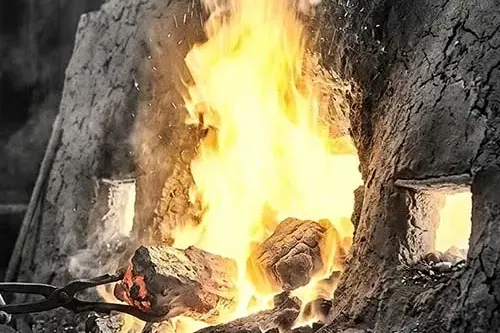
The journey starts with average 1060 metal , a strong material far away the deluxe katana it will transform . Proficient bladesmiths employ a sophisticated process of folding and hammering the primitive steel, repeatedly firing it and flattening it to extract impurities and establish a consistent grain structure. This demanding process, often going on for months , builds the imperative strength and elasticity characteristic of a original Japanese blade . Extra heat manipulations , including accurate hardening and conditioning , are mandatory to achieve the intended equipoise of sharpness, longevity and beauty .- Stacking: Lowers impurities and establishes grain structure.
- Shaping: Designs the steel into the initial blade form.
- Hardening: Determines the final hardness and flexibility.
The Everlasting Fascination of the Katana: Broad Investigation of Metalcraft and Adjustment
The iconic katana persists a strong symbol standing for Japanese folklore, its allure far moving past mere arms . Forged from exclusive steel and periodically featuring intricate details , the system of creation itself is a sacred art. Beyond the fundamental craftsmanship, the ability to customize a katana - from the blade pattern to the grip wrapping and clasp - opens for a perfectly individual communication for both supporters and followers alike. This amalgamation of tradition-rooted steelwork and boundless personalization creates the katana's continued widespread acceptance across the universe.