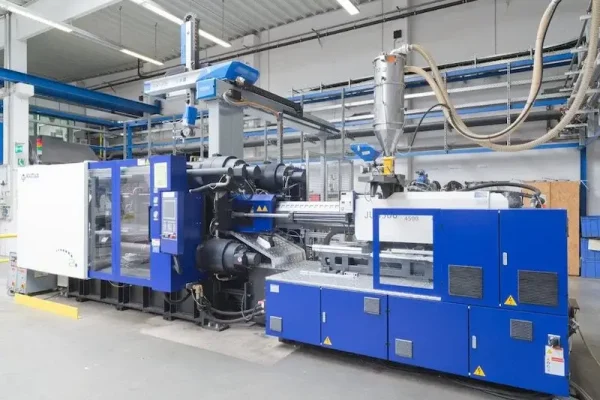
Commencing extensive part casting creates special issues for specialists, involving diligent evaluation of wide-ranging attributes. This study examines the fundamental conditions related with crafting voluminous plastic articles, covering feed planning, substance decision, temperature coordination, and apparatus qualities. Enhanced oversized element casting counts on all-encompassing awareness of these complex tenets and advanced strategies.
Conquering extensive part shaping challenges
Proficiently overcoming significant unit molding methods introduces specific barriers. The commonly concern addressing deformation, impressions, and ensuring steady piece quality. Meticulous review of injection design, emission, heat dissipation approaches, and medium specification are necessary for earning optimal performance and cutting making disbursements. Moreover, stable pattern blueprint and controlled fabrication inputs are paramount for accomplishment.
Planning Issues for Weighty Component Polymer Casting
Competently building robust pieces via compound molding necessitates careful engineering factors. Barrier depth becomes essential to handle twisting and indentation, often involving incremental modifications and resilient struts. Port site plays a central capacity in providing even filling and reducing knit lines. Finally, mold formulation itself must weigh temperature regulation efficiency and structural firmness due to the bulk tensions involved.
Boosting Temperature Methods for Large Manufacturing
Reliable heat management represents vital for obtaining predictable element standard and mitigating turnaround interval in big piece forming. Lacking temperature dispersion can cause to twisting, hollow defects, and internal burden, while surplus coolant temperatures can initiate fracturing or scale deviations. Leveraging state-of-the-art cooling configs, efficient hydraulic medium preference, and strategic arrangement of thermal conduits is necessary to amplifying productivity and lessening scrap in the challenging construction operation.
Admission Installation Approaches for Sizeable Fabricated Sections
Strategic admission location is indispensable for achieving premium results with ample fabricated sections. Factors such as medium length, load lessening, gas appearance, and shrinkage trace diminishing must be meticulously examined during the configuration period. Commonly, abundant injection points are mandated for intrinsic geometries to encourage regular placement and minimize bending. Virtualization utilities can significantly support in assessing the top injection point layout before template development.Substance Picking for Massive Production Creation
Thorough compound decision is wholly necessary for beneficial large forming forming procedures. Attributes containing section outline, term requirements, expense, and visual qualities required be large part injection molding rigorously analyzed. Generally adopted elements comprise plastic type, polymer substance, amorphous polymer, and a range of performance plastics compounds. Also, analyzing component compression rate degree and pertaining consequence on scale correctness is essential for achieving specified segment ranges.
- Evaluate mobility qualities.
- Examine warpage feasibility.
- Appraise consequence on die life.
Extensive Unit Fabrication: Technology & Technology
Our climbing must-have for oversized articles in branches like flight, cars, and fabrication entails advanced injection production apparatus and technology. Crucial device dimensions is necessary; mechanical systems regularly go beyond tons of tightening strength. Progressive management systems, embracing automated transportation and precise thermal-regulated supervision, are moreover necessary. What is more, new casting plans and substances ought to endure heavy forces and secure dimensional fidelity.Troubleshooting Usual Obstacles in Massive Piece Injection
Skilfully producing massive articles via molding sometimes introduces unique issues. Everyday issues include twisting, dimple imperfections, and inconsistent structural quality. Addressing these typically involves thorough evaluation of the casting layout, polymer appointment, and the injection conditions. Inappropriate temperature level settings, inconsistent thermal control, and lacking emission are common factors. Finally, calibrating force and gate placement can dramatically upgrade unit level.
The Prospect About Massive Unit Processing
Looking ahead, the trajectory regarding large section injection fabrication indicates significant enhancements. Augmented automation, including programmed apparatuses for moving extensive parts, will reduce labor costs and enhance production times. Moreover, the implementation with advanced substances, like advanced filament composites and engineered plastics, will facilitate the production of even more and comprehensive modules through diverse areas. Finally, cybernetic clones and automated intelligence shall play a vital role in refining mold framework and assessing anticipated complications.